Durch das innigste Verständnis der Antike ist der deutsche Geist zu der Fähigkeit gelangt, das Reinmenschliche selbst wiederum in ursprünglicher Freiheit nachzubilden, nämlich, nicht durch
die Anwendung der antiken Form einen bestimmten
Stoff darzustellen, sondern durch eine Anwendung
der antiken Auffassung der Welt die nothwendige
neue Form selbst zu geben.
Richard Wagner, Was ist deutsch
(1865, publiziert 1867)
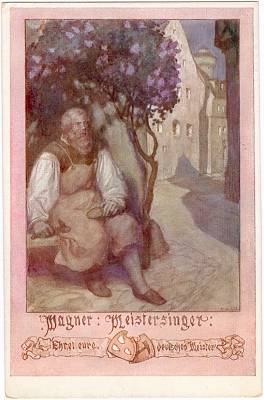
DIE HANDLUNG DER OPER
DIETER DAVID SCHOLZ
WIEVIEL KUNST BRAUCHT DAS LAND ODER DIE AKTUALITÄT DER «MEISTERSINGER»
ERNST BLOCH
ÜBER BECKMESSERS PREISLIED-TEXT
UDO BERMBACH
DIE UTOPIE DER SELBSTREGIERUNG - POLITISCH-ÄSTHETISCHE ASPEKTE DER «MEISTERSINGER»
FRIEDRICH NIETZSCHE
ETWAS AUF DEUTSCHE ART VIELFACHES
KLEINE MEISTERSINGER-CHRONIK
AUS DEM BRIEFWECHSEL
R. STRAUSS - H. VON HOFMANNSTHAL
THOMAS MANN
IN SEINEM ESSAY «LEIDEN UND GRÖSSE R. WAGNERS» (1933)
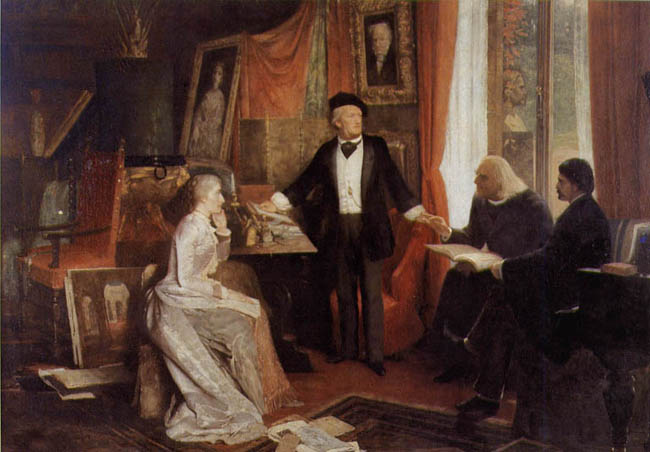
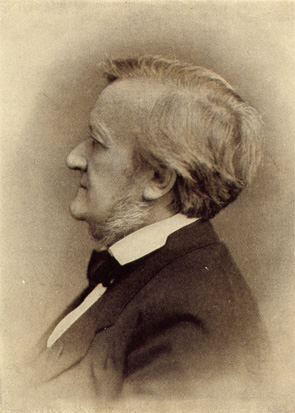
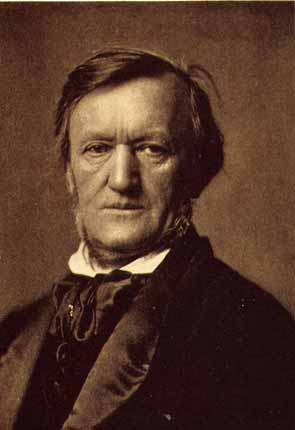
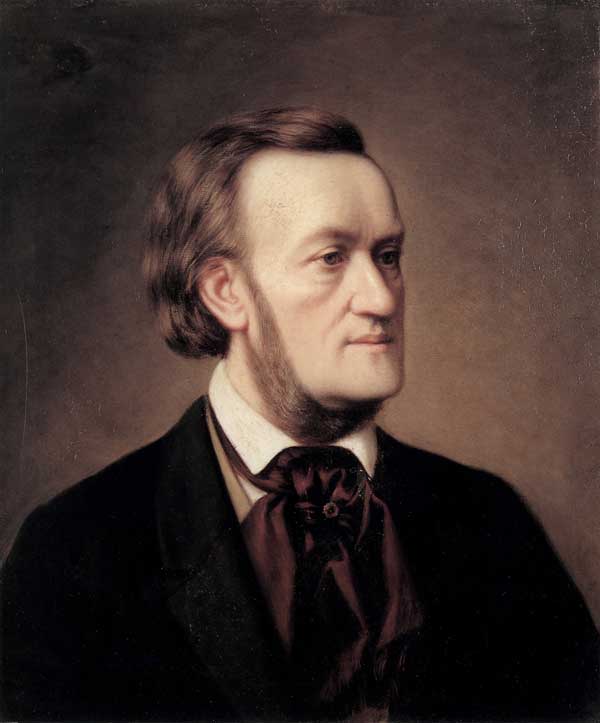
Wilhelm Richard Wagner (22 May 1813, Leipzig, Germany – 13 February 1883, Venice, Italy) was a German composer, conductor, theatre director and essayist, primarily known for his operas (or "music dramas", as they were later called). Unlike most other great opera composers, Wagner wrote both the scenario and libretto for his works.
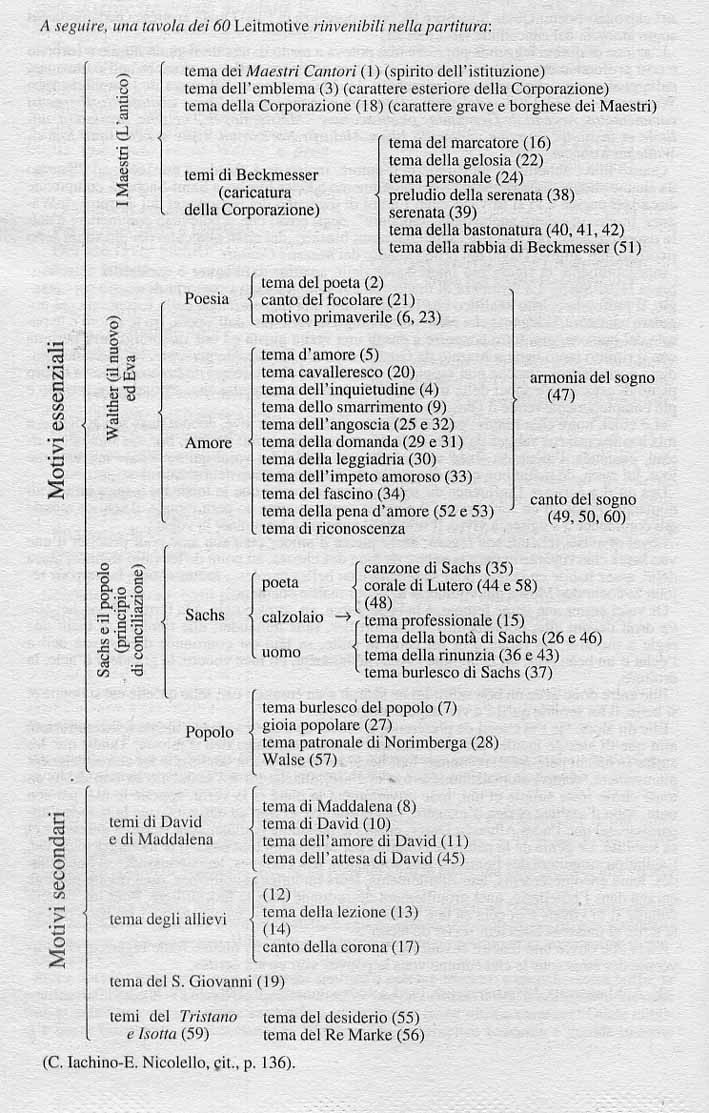
Wagner's compositions, particularly those of his later period, are notable for contrapuntal texture, rich chromaticism, harmonies and orchestration, and elaborate use of leitmotifs: musical themes associated with particular characters, locales or plot elements. Wagner pioneered advances in musical language, such as extreme chromaticism and quickly shifting tonal centres, which greatly influenced the development of European classical music.
He transformed musical thought through his idea of Gesamtkunstwerk ("total artwork"), the synthesis of all the poetic, visual, musical and dramatic arts, epitomized by his monumental four-opera cycle Der Ring des Nibelungen (1876).
To try to stage these works as he imagined them, Wagner built his own opera house, the Bayreuth Festspielhaus. Richard Wagner was born at no. 3 ('The House of the Red and White Lions'), the Brühl, in Leipzig on 22 May 1813, the ninth child of Carl Friedrich Wagner, who was a clerk in the Leipzig police service. Wagner's father died of typhus six months after Richard's birth, following which Wagner's mother, Johanna Rosine Wagner, began living with the actor and playwright Ludwig Geyer, who had been a friend of Richard's father. In August 1814 Johanna Rosine married Geyer, and moved with her family to his residence in Dresden. For the first 14 years of his life, Wagner was known as Wilhelm Richard Geyer. Wagner may later have suspected that Geyer was in fact his biological father, and furthermore speculated incorrectly that Geyer was Jewish. Geyer's love of the theatre was shared by his stepson, and Wagner took part in his performances. In his autobiography, Wagner recalled once playing the part of an angel. The boy Wagner was also hugely impressed by the Gothic elements of Weber's Der Freischütz. In late 1820, Wagner was enrolled at Pastor Wetzel's school at Possendorf, near Dresden, where he received some piano instruction from his Latin teacher.
Wilhelm Richard Wagner (* 22. Mai 1813 in Leipzig; † 13. Februar 1883 in Venedig im Palazzo Vendramin-Calergi) war ein deutscher Komponist, Dramatiker, Schriftsteller, Theaterregisseur und Dirigent. Mit seinen Musikdramen gilt er als einer der bedeutendsten Erneuerer der europäischen Musik im 19. Jahrhundert. Er veränderte die Ausdrucksfähigkeit romantischer Musik und die theoretischen und praktischen Grundlagen der Oper, indem er dramatische Handlungen als Gesamtkunstwerk gestaltete und dazu Text, Musik und Regieanweisungen schrieb. Als erster Komponist gründete er Festspiele in dem von ihm geplanten Bayreuther Festspielhaus.
Seine Neuerungen in der Harmonik beeinflussten die Entwicklung der Musik bis in die Moderne. Richard Wagner wurde am 22. Mai 1813 in Leipzig (im Gasthof „Zum roten und weißen Löwen”) als neuntes Kind des Polizeiaktuarius Carl Friedrich Wagner (1770–1813) und der Bäckerstochter Johanna Rosine Wagner, geb. Pätz (1774–1848), geboren und am 16. August auf den Namen Wilhelm Richard Wagner in der Thomaskirche zu Leipzig getauft.[1] Sechs Monate nach seiner Geburt, am 23. November 1813, starb der Vater an Typhus. Im August 1814 heiratete Wagners Mutter den Schauspieler und Dichter Ludwig Geyer (1780–1821), der sich der Familie nach dem Tod des Vaters angenommen hatte und den Carl Friedrich Wagner sehr geschätzt hatte. Spekulationen, wonach Geyer der leibliche Vater Richard Wagners gewesen sei, sind weder bewiesen noch klar widerlegt. Zeitlebens sollte Richard „wegen seiner Väter” ein Identitätsproblem haben. Noch 1814 übersiedelte die Familie nach Dresden. Am 16. Februar 1815 wurde Richards Halbschwester Cäcilie geboren. Seine älteren Geschwister hießen Albert, Gustav, Rosalie, Julius, Luise, Klara, Theresia und Ottilie.
Wilhelm Baumgartner (1820-1867)
Johann Carl Eschmann (1826-1882) Alexander Müller (1808-1863)
Johann Bernhard Spyri (1821-1884)
Jakob Sulzer (1821-1897)
Otto Wesendonck (1815-1896)
und Mathilde Wesendonck (1828-1902)
Wilhelm Richard Wagner (22 mai 1813, Leipzig - 13 février 1883, Venise) est un compositeur allemand. Génie hors normes d'une rare universalité, Wagner doit son importance dans l'histoire de la musique occidentale à ses opéras, en particulier L'Anneau du Nibelung, festival scénique en un prologue et trois journées dont il écrivit lui-même les poèmes et dont la conception bouscula délibérément les habitudes de l'époque pour aller, selon ses propres termes, vers un « art total » : spectacle complet, mélodie continue et emploi du leitmotiv. "La musique rejoint le vers pour former, depuis Wagner, la poésie." — Stéphane Mallarmé, Divagations
Sa vie bohème et fantasque lui fit endosser de multiples habits : révolutionnaire sans le sou, fugitif traqué par la police, homme à femmes, confident intime du roi Louis II de Bavière, critique et analyste musical, intellectuel en proie aux errements idéologiques de son époque qui sera récupéré par les nazis : son comportement et ses œuvres ne laissaient personne indifférent ; aussi doué pour nouer des amitiés dans les cercles artistiques et intellectuels que pour les transformer en inimitiés, sachant créer le scandale comme l'enthousiasme, il a suscité des avis partagés et souvent enflammés de la part de ses contemporains. Ses conceptions artistiques avant-gardistes ont eu une influence déterminante dans l'évolution de la musique dès le milieu de sa vie. À l'égal d'un Verdi né la même année, mais au style radicalement différent, il est considéré comme l'un des plus grands compositeurs d'opéras du xixe siècle.
by Derrick Everett. Montsalvat is a thorough
web site which deals with Wagner's last
great work, Parsifal, exclusively.
PARSIFAL
LIBRETTO AND COMMENTARY
by Hans Zimmermann.
This extensive site includes a comparison of Parsifal with Wolfram von Eschenbach's Parzivâl and the corresponding work of Chrétien de Troyes.
In German.
by Rick Bogart.
Overview of all the operas of Wagner
with performance history, synopses and
complete libretti for many (but not all)
of the works. Important web site!
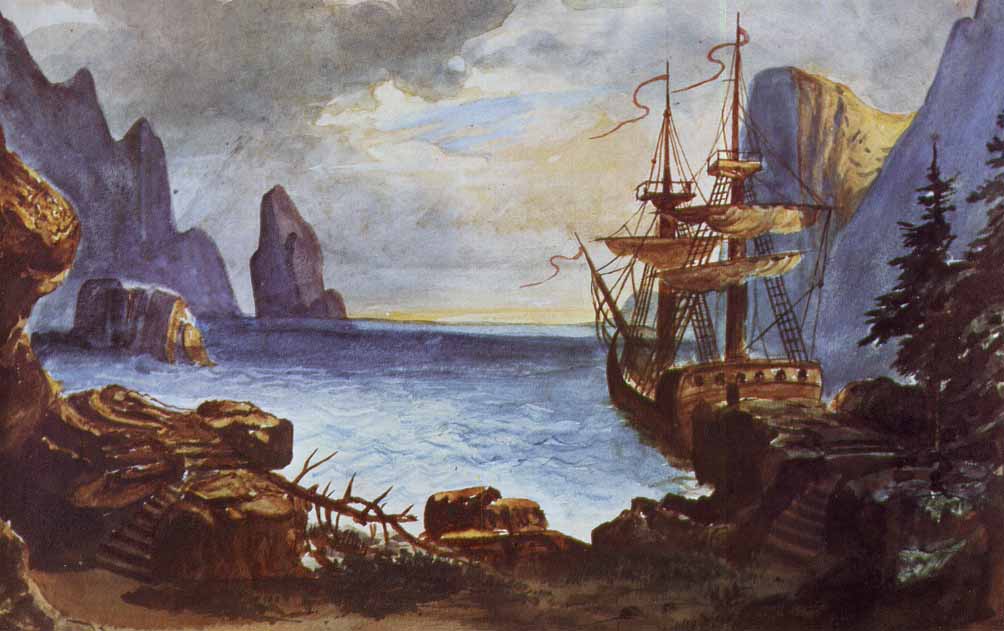
1871 - Mise en scène et direction musicale: Johann Herbeck. Projet de décor du 1er acte réalisé par Theodor Jachimovicz pour la première réalisation du nouvel Opéra du Ring. Évoquant les tableaux de paysages romantiques, la scène représente le calme après la tempête, précédant l'arrivée du vaisseau du Hollandais. Les pontons situés des deux côtés de la scène étaient vraisemblablement praticables.
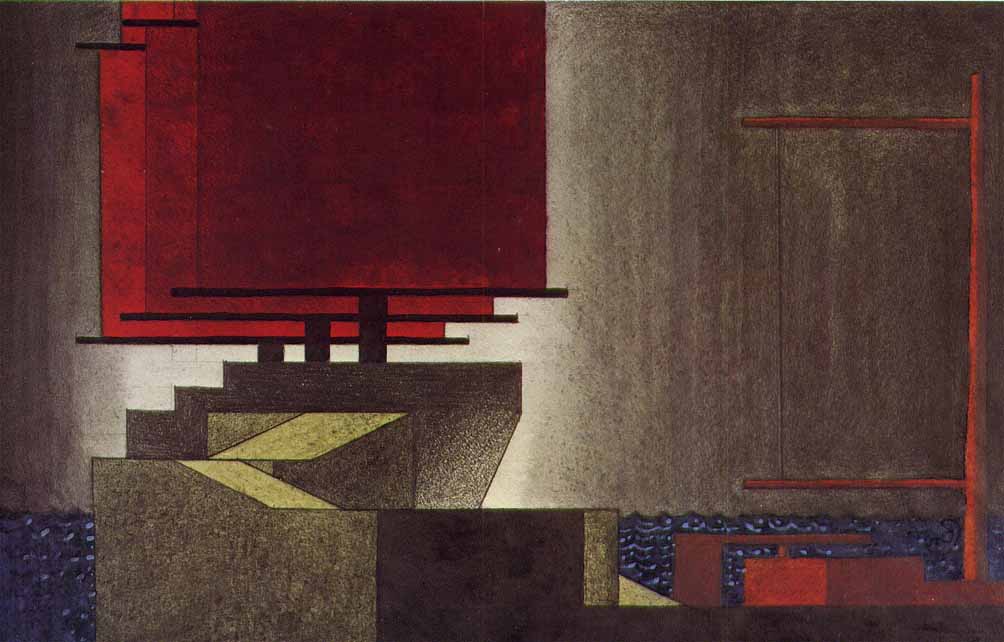
Kroll-Oper, Berlin, 15 janvier 1929. Mise en scène: Jürgen Fehling. Costumes: Ewald Dülberg. Chef d'orchestre: Otto Klemperer. Projet de décor du 1er acte, réalisé par Ewald Dülberg dans le style de la «Nouvelle Objectivité». À gauche, le vaisseau du Hollandais; à droite, celui de Daland. Aucun charme pittoresque, pas de projections, pas de manoeuvres navales. Le navire du Hollandais, avec ses mâts échelonnés sur trois niveaux et ses voiles rouges avait une immédiateté laconique et une présence ténébreuse. Le premier plan ne représente pas la grève rocheuse, mais plutôt la jetée d'un port.